
In the world of wound care, few dressings have stood the test of time quite like sterile paraffin gauze. Also known as paraffin tulle or petroleum-impregnated gauze (think classic brands like Jelonet), this simple yet highly effective dressing remains a go-to choice for nurses, surgeons, burn specialists, and wound care experts worldwide.
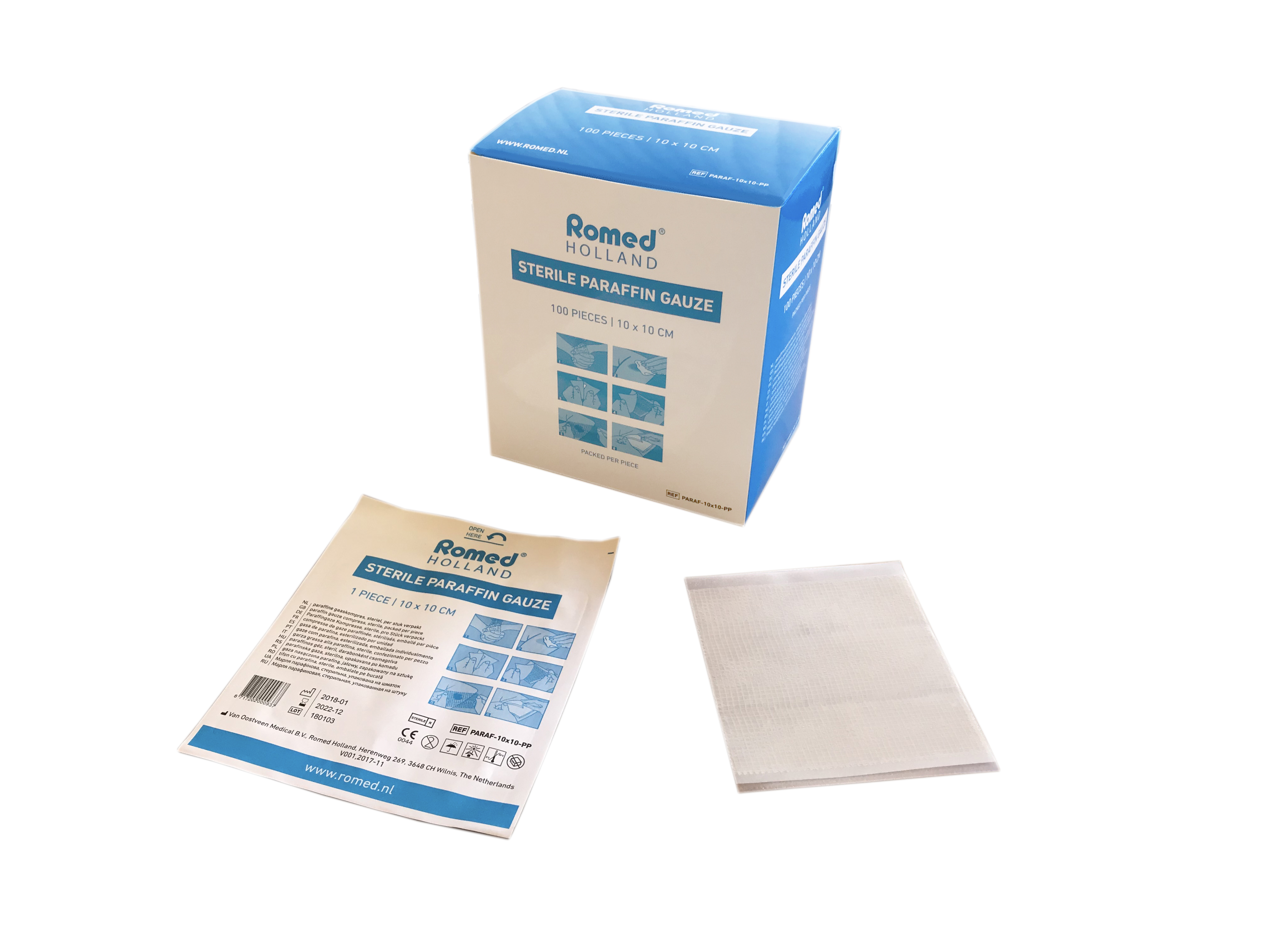
What Is Sterile Paraffin Gauze?
Sterile paraffin gauze is a leno-weave cotton or cotton-viscose fabric impregnated with medical-grade white soft paraffin (petrolatum). It is supplied in sterile packaging and used as a primary contact layer directly on the wound. Its open-mesh structure allows exudate (wound fluid) to pass through to a secondary absorbent dressing while the paraffin creates a non-adherent barrier.
Key Reasons Healthcare Professionals Prefer It
Non-Adherent Properties
One of the biggest advantages is that it does not stick to the wound bed. Traditional dry gauze can tear newly formed granulation tissue or epithelial cells during changes, causing pain and delaying healing. Paraffin gauze minimizes trauma, making dressing changes far less painful for patients.
Maintains a Moist Wound Environment
Modern wound healing science emphasizes moist environments for faster epithelialization (new skin cell growth). The paraffin helps retain natural wound moisture, prevents desiccation, reduces scab formation, and supports quicker tissue repair while allowing drainage.
Reduces Pain and Trauma
Patients — especially those with burns, skin grafts, ulcers, or sensitive skin — report significantly less discomfort. This improves compliance with dressing regimens and overall healing outcomes.
Versatile and Clinically Proven Applications
Partial-thickness burns and scalds
Skin graft donor/recipient sites
Leg ulcers and pressure sores
Abrasions, lacerations, and surgical wounds
Superficial wounds with low to moderate exudate
It’s particularly valued in emergency settings, pediatrics, and resource-limited environments.
Cost-Effective and Practical
Compared to many advanced dressings, sterile paraffin gauze is affordable, widely available, easy to apply and cut to size, and requires no special training. It pairs well with secondary dressings for absorption or added protection.
Sterility and Infection Control
Being sterile straight out of the pack reduces contamination risk. The paraffin layer also provides a soothing, protective interface.
Limitations to Consider
While excellent for many wounds, it is not ideal for heavily exudating wounds (where it may need frequent changes or a different primary dressing) or deep cavities without proper secondary support. It may require a secondary dressing to manage moisture and bacteria.
Why It Remains a Staple in 2026
In an era of high-tech wound care products, paraffin gauze proves that sometimes the simplest solutions are still the most reliable. It balances efficacy, patient comfort, and practicality — core priorities for busy healthcare professionals focused on evidence-based, compassionate care.
What are your experiences with paraffin gauze? Have you seen better results with modern alternatives for specific wound types, or does this classic still reign supreme in your practice? Share in the comments — let’s discuss best practices!